
There was a time when people feared that calculators would replace human brain power. They assumed that because calculators were utilized, people’s energies would no longer be needed and people would thus grow lazy. Did that happen? I don’t think anyone feels replaced by calculators these days. In fact, most of us wield the pocket-sized tool, reincarnated as an app in our smartphones. Using a calculator has historically taken a certain amount of savvy in order to enter the appropriate digits and markers. One needs to know if they are multiplying or dividing, for example. Now, even more intelligent tools have entered the world stage, solving problems in a matter of seconds. Answers arrive nearly as swiftly as the questions take to be expressed. We don’t even need to come up with the initial questions—we can ask AI to do that for us. Exercising our human curiosity is a whole new workout, still in its primary stages. More and more the feat will be to figure out ways to keep ourselves challenged.
OTHER-HUMAN
It is miraculous and at times unnerving how concisely human AI can seem. Yesterday evening I had a nice conversation with ChatGPT about my sentiments for Oregon—the state of my birth. I requested that the AI adjust its tone to match a more Oregonian flavor, and it did so quite pleasingly, even gifting me some creative ideas on how to incorporate Oregon inspired whimsy into my everyday life. It suggested an Oregon-themed corner of my living space, complete with flannels and the sound-effects of rain. How hilarious! I was laughing alone in my room, interacting with this non-human non-entity that felt so empathic.
Not only does AI behave in written communication like a person does, it can, as you probably know, also exhibit images that appear completely real. One recent creation by Midjourney prompt designer David Darko, entitled “Walking Away”, features music, lyrics, and images brought to virtual life by AI. Beneath the video, Darko details his process, and includes this statement: “I’m aware that AI can’t replace live actors, models, and camera shooting. This is just a test to see how far we can push the current AI models” (2024). Offering power and increased personal knowledge, AI can flood us with all kinds of illusions. How will we differentiate the real from the fake and what impacts will this uncertainty have upon our perceptions?
AI AND YOU
What is YOUR relationship to AI? Do you look forward to having robot friends? Are you eager to immerse yourself in the Spatial Computing arena? The World Economic Forum recently posted a video beginning with the assertion, “Spatial computing could lead the next big technology revolution” (2024). Just as AI expands in intelligence, so should we. This includes studying AI in all its evolutionary stages and keeping up on all the latest trends and discoveries. Knowing what is happening in the world of technology helps us to form an opinion. Who knows when your opinion will come in handy, potentially even landing you the job you so desire.
COMPETITION AND ADDICTION
AI increases competition and the drive to succeed, dishing up precious information immediately. Janelle Bombalier of Florida International University spells out an array of positives in her article, “The Competitive Advantage of using AI in Business” (2024). Among other things, she focuses on the benefits for market research, operational efficiency, and customer/employee relationship enhancement. On the other hand, Genevieve Cunningham of The Joint Chiropractic presents the challenge of AI’s potentially addictive qualities. In her piece, “AI Addiction: Nothing Artificial About a New Dependency”, the author notes that even “The chief technology officer of the AI-based company OpenAI has warned that AI may become both addictive and dangerous to the general population” (2024). We must be mindful of how much time we spend with AI, so that it remains a friend and not a foe. So that we do not lose ourselves to the allure.
EMBRACING CHANGE
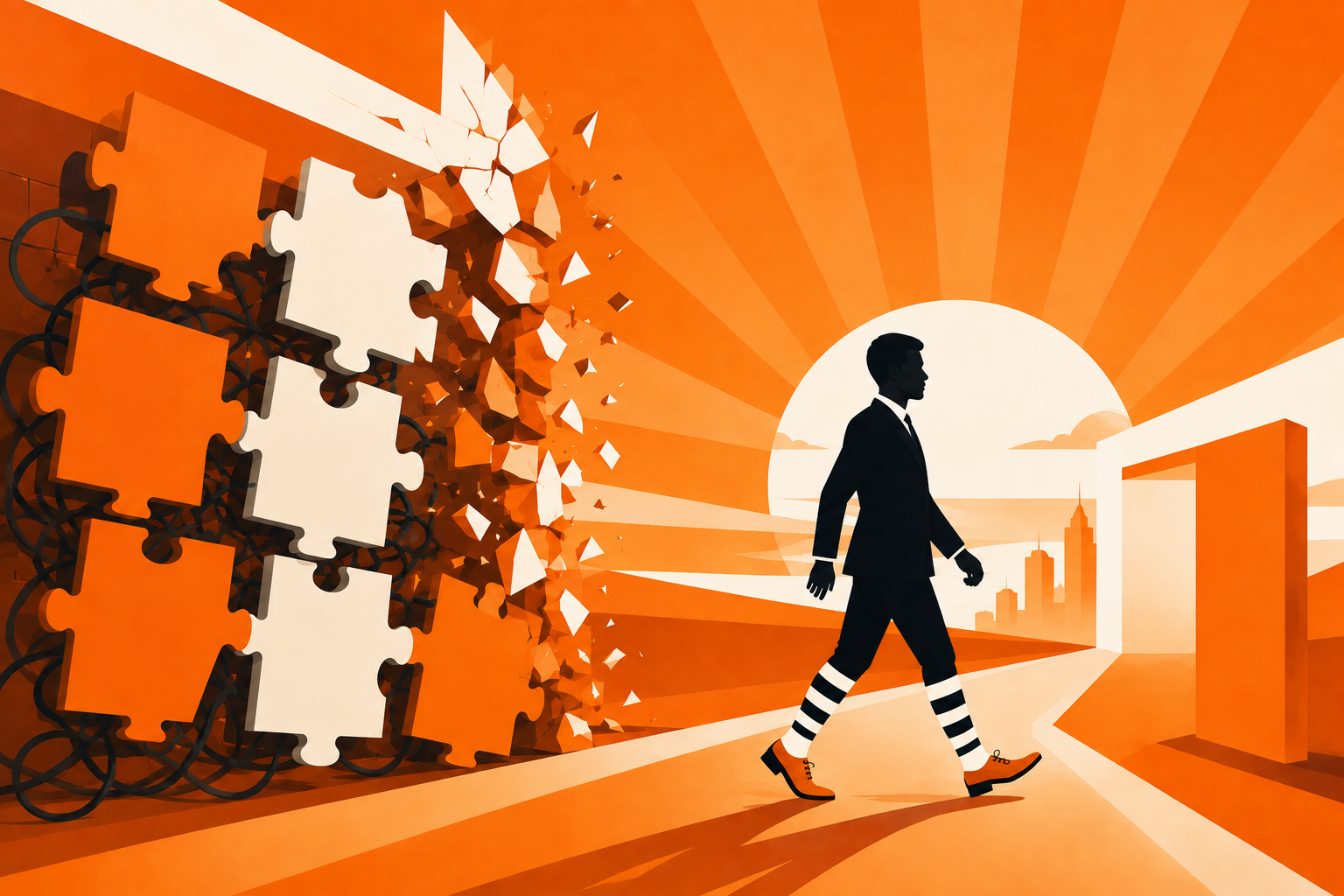
Are you terrified that AI will take away your job or replace you entirely? Do you prevent success by avoiding modern day advancements? Marc Shulman of Long Island Psychology reasons in his piece, “Why Do We Fear Change”, that “Far too often, people fear change even in situations when change would be good for them. Life is not meant to be stagnant” (2022). While emotions might arise that cause us to pause and wonder if we are going to be okay, our resistance to new findings and applications will only set us back. It’s good to question and consider, but we are wise to accept AI’s place in our everyday lives. All our brainstorms, efforts, and feedback will fuel the direction of our global future.
Fortunately for now, AI is created by us and steadily molded through our own use and methodical evaluations. Getting involved and staying engaged, we can ensure the reliability and the ethics of the tools we are heartily honing for a brighter and more calculated future.



Leave a Reply