
Everyone gets afraid from time to time. We’re living beings, aware of our fragility. Some people are consumed by fear, while others shrug their shoulders and let it pass like water down the drain. No matter how we choose to respond to it, fear impacts our mood and sense of wellbeing in some way or other. If we struggle with managing our fears and we allow them to overwhelm us, our actions can be negatively directed, throwing our hearts offbeat and our thoughts out of tune.
According to Better Health Channel, fears can actually function as protection, urgently guiding us to avoid something sinister like a hissing snake. Their author claims that in such a situation, “The feeling of fear is natural and helps keep you safe”. However, some fears can manifest as all-consuming paranoias, anxieties, or phobias.
Imagine for example, that we are attending a networking mixer for tech professionals, but when we arrive at the venue, we are filled with intense fear that snakes are hovering near the buffet. This fear is not a puddle—it’s a flash flood. It dampens up our entire evening, impeding the flow of conversation that otherwise could have built new connections. Amidst the hype of this social mixer, we are soggy and weighed down with fear. This is totally irrational since there are no snakes in sight, nor are they native to the region in this imagined scenario.
How can we determine if our fears are serving us or if they are biting us—venomously—in the back? Better Health Channel’s author asserts: “Fear is unhealthy when it makes you more cautious than you really need to be to stay safe, and when it prevents you from doing things you would otherwise enjoy”. In comparing the above examples, it would seem clear that the fear of the hissing snake was useful while the fear of unseen snakes at a social event was not useful.
However, it’s not always that easy to make sense of fear. Life adds so many layers to our days, and complexities to our ways. Lisa Fritscher offers clarification in her article, “Fear vs. Phobia: What’s the difference?” explaining that, “If you have a simple fear, you will not spend much time thinking about that fear. It will only affect you when you are forced to confront it, such as actually boarding a plane. If you have a phobia, though, you are likely to develop a fear of fear itself”. Imagine being afraid of fear. It’s kind of like being in love with love rather than being in love with a particular person.
We job hunters don’t want to be disillusioned. Therefore, it’s vital that we measure and acknowledge the way fear steers us. If we allow past negative experiences to influence our courage in putting ourselves out there, we are less likely to succeed.
Strangely, fear can sometimes feel good. Some people enjoy being startled by the unexpected or creeped out by the mysterious. Nicole Roberts composed a fabulous piece for Forbes on the fear topic, opening with the iconic shower scene from the movie Psycho. She explains the basic science behind our fear responses, adding that, “Your brain and body are conditioned to find pleasure in situations that push your normal boundaries, and seek out safe, but abnormal situations”. Knowing this, perhaps we can lean into our fears with curiosity rather than dread.
Is it possible to reason with ourselves when we are afraid, assuring ourselves that we are safe? Can we make light of the matter by imagining that the situation is really just a series of sketches in a hilarious comic book strip? If our fears are manageable, the stimulation they provide might actually keep us on our toes in a way that leads us to dance and feel energized. Of course, this all depends on our mental and emotional balance. So often, we job hunters are carrying large amounts of stress, so playing with fear could result in playing with a psychological version of fire. Have a small bucket of water at the ready.
Seth Gillihan of Psychology Today articulates that “Thoughts affect our actions, like when we think someone won’t like us so we avoid them. Actions influence thoughts too, so facing a certain fear can change the way we think about it”. We would be wise to consider this looping of cause and effect, as we can get all tangled up in chasing our own tails rather than moving forward.
Such dizzy-making self defeat can put us into quite the stupor. Fortunately, there are countless resources available, like A Cognitive Connection’s helpful article: “Anxiety Brain Fog: 10 Tips for Managing Your Mind”. Our minds can grow clogged with fog when the fear of the unknown, or the fear of repeated missteps, leads us to avoid taking action.
Remember that we job hunters are like the Golden Gate Bridge, enduring fog in all our glory. We are spanning the reckless waters, connecting rugged shores, and looking oh so stunningly noble in the process.
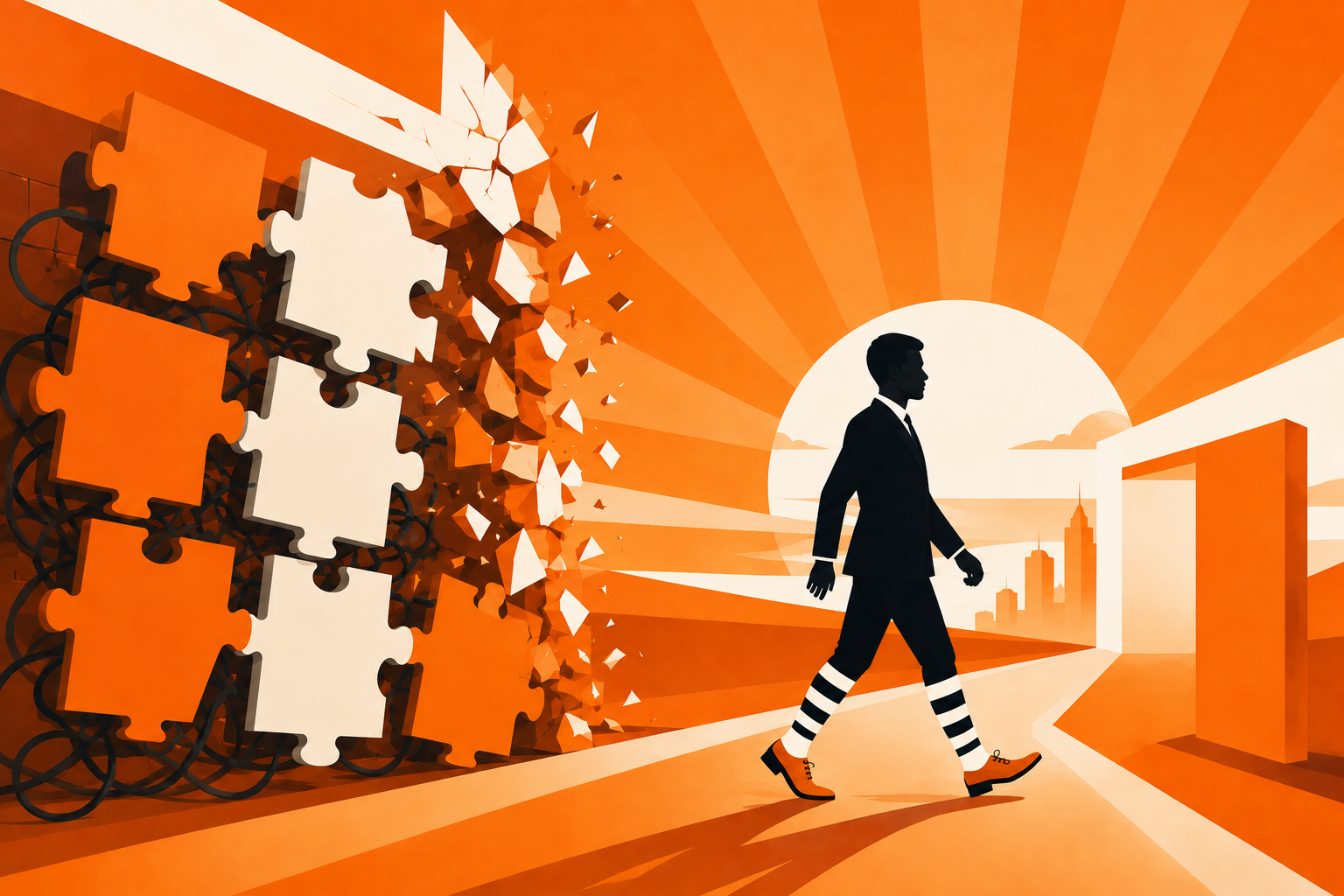
For we are stronger than our fears, and our fears can give us strength if we let them.




Leave a Reply